

What ElevenLabs Is Today: Platform State and Evolution

As of February 20, 2026, ElevenLabs has solidified its position as the definitive category leader in the artificial intelligence voice sector, having transitioned from a specialized model provider into a comprehensive conversational audio infrastructure platform. The company’s recent $500 million Series D financing round, led by Sequoia Capital, has propelled its valuation to $11 billion, a milestone that reflects the maturity of its technology and its widespread adoption across more than 60% of Fortune 500 companies. ElevenLabs has moved beyond its origins as a high-fidelity text-to-speech (TTS) engine, now offering an integrated stack that includes state-of-the-art speech-to-text (STT), reasoning orchestration, and multi-modal creative tools.
The platform is currently structured into three primary product families: ElevenAgents, ElevenCreative, and ElevenAPI. This restructuring, implemented in early 2026, clarifies the platform’s dual identity as both a creative powerhouse and a robust enterprise orchestration layer. ElevenAgents represents the flagship conversational offering, providing a state-of-the-art turn-taking model and integrated retrieval-augmented generation (RAG) capabilities that allow enterprises to deploy autonomous voice agents capable of resolving complex customer inquiries in real-time.
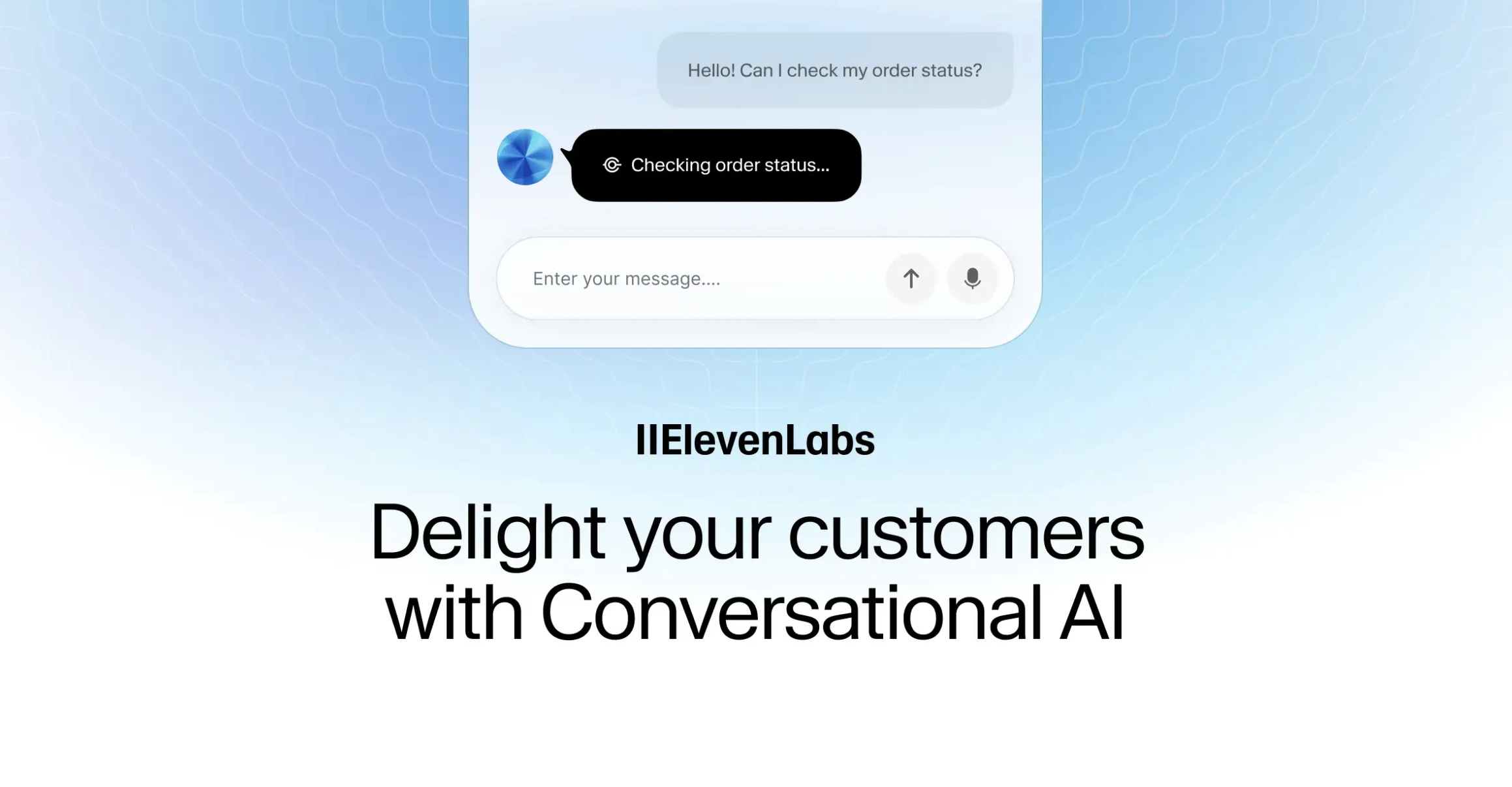
ElevenCreative encompasses the legacy studio tools, enhanced in 2026 to include multi-track editing, music generation, and lip-syncing for video localization. Finally, ElevenAPI serves as the foundational developer layer, offering low-latency endpoints for TTS and the newly released Scribe v2 transcription model.
The platform’s deployment modes have expanded to meet diverse engineering requirements. While the web interface remains the entry point for creators, production-grade applications are primarily built using a robust suite of SDKs available for Python, JavaScript, Swift, and Kotlin, as well as a low-level WebSocket and WebRTC API for custom integrations.
The introduction of WebRTC as a standard transport protocol in February 2026 has been particularly transformative, enabling superior audio quality with built-in echo cancellation and background noise removal, which are critical for browser-based conversational applications.
The product evolution over the next 12 months is expected to focus on “fused” multi-modal approaches. ElevenLabs leadership has signaled that the roadmap includes models where audio and video are generated simultaneously in a conversational setting, moving away from cascading separate models for voice and lip-sync.
Furthermore, the platform is doubling down on “Zero-Shot” and “Professional” voice cloning, aiming to reduce the training data requirements while increasing the stability of clones across long-form content. For technical buyers, ElevenLabs today is no longer a “luxury” feature for creators but a functional utility for global enterprises seeking to replace legacy IVR systems with empathetic, context-aware AI partners.
System Architecture: AI Voice Production in 2026
Production architectures for AI voice are fundamentally divided by their latency tolerance. Enterprises must choose between an asynchronous “Offline” architecture for content generation and a synchronous “Real-time” architecture for live dialogue. ElevenLabs provides the components to build both, but the design choices regarding transport and orchestration differ significantly between them.
Offline Creative Content Architecture
The offline architecture is optimized for maximal quality and emotional consistency. It is the preferred choice for audiobooks, film dubbing, and marketing campaigns where the audio is generated ahead of time and consumed later. In this model, ElevenLabs utilizes a proprietary diffusion-based synthesis engine (v3) that processes text in larger chunks to maintain prosodic stability.
Offline Text-to-Audio Flow:
Input: Structured text or script files are ingested via the Studio 3.0 interface or the
/v1/text-to-speechendpoint.Normalization: The ElevenLabs Text Normalizer (v3.1) converts symbols, abbreviations, and numbers into their spoken equivalents with 99%+ accuracy.
Synthesis: The Eleven v3 model performs high-fidelity inference, integrating “Audio Tags” for emotion and delivery direction.
Mastering: Studio 3.0 allows for multi-track editing, adding background music via Eleven Music and ambient sound effects via SFX v2.
Output: Final audio is exported in formats including 48kHz WAV, ultra-lossless PCM, or variable bitrate MP3.
Real-time Conversational Architecture
Real-time architectures require a “multimodal cascading” pipeline. Despite the industry’s interest in end-to-end speech-to-speech (STS) models, production environments in 2026 rely on the integration of four distinct components to maintain controllability and guardrails.
Product Surface Area Inventory: Capability Map
The ElevenLabs platform in 2026 is characterized by a “surface area” that covers the entire lifecycle of an AI voice interaction, from data ingestion to safety enforcement.
Text-to-Speech (TTS) Models and Prosody
The model catalog has been streamlined into four primary engines, each targeting a specific performance tier.
Eleven v3: The flagship model for high-stakes creative and emotional dialogue. It supports over 70 languages and is designed for “Dramatic Delivery,” allowing for non-verbal cues such as whispering, shouting, and laughing.
Eleven Multilingual v2: Optimized for long-form stability. This remains the gold standard for audiobooks and e-learning, offering consistent voice identity across 29 languages.
Eleven Turbo v2.5: A balanced model for high-quality conversational agents, offering ~250ms latency with near-human prosody in 32 languages.
Eleven Flash v2.5: The ultra-low-latency leader (~75ms model time), specifically engineered for high-concurrency real-time apps where response speed is the primary driver of user satisfaction.
Prosody control has shifted from simple sliders to “Audio Tags” and “Expressive Mode”. By wrapping words in brackets—e.g., [nervously]—users can guide the performance of the v3 model without the need for complex SSML tags, although standard punctuation like ellipses and capitalization still heavily influence rhythmic delivery.
Transcription and Understanding (Scribe v2)
The 2026 release of Scribe v2 provides an accuracy levels that exceed previous industry benchmarks. Key capabilities include:
Keyterm Prompting: Allowing developers to “feed” the model up to 100 specialized terms (industry jargon, brand names) to ensure 99%+ recognition accuracy.
Smart Language Detection: Automatically identifies and switches between 90+ languages in the same audio stream, which is critical for global multilingual customer support.
Speaker Diarization: Distinguishes between up to 32 individual voices, providing precise word-level timestamps and entity detection.
Orchestration and External Tooling
ElevenLabs has introduced “ElevenAgents” as a dedicated orchestration platform to manage the conversation logic.
Model Context Protocol (MCP): A unified standard for connecting voice agents to external data sources. In production, this allows an agent to query a customer’s billing history from Salesforce or a knowledge base from Notion directly mid-turn.
Session Memory and Context: Agents can now maintain internal state across multiple conversations, identifying a returning user by their ID and referencing previous interactions.
Interruption Handling: The turn-taking model has been upgraded to “Turn-v3,” which uses predictive acoustic analysis to determine if a user pause is an invitation to speak or a “thoughtful silence,” significantly reducing awkward over-talking.
Enterprise Security and Compliance
The 2026 feature set for enterprises focuses on “Zero-Trust” and data sovereignty.
SSO and Workspaces: Full SAML 2.0 and OIDC support for Okta, Azure AD, and Google Workspace. Workspaces include a “Lite Member” role to minimize administrative overhead for large teams.
Compliance: SOC 2 Type II, ISO 27001, and PCI DSS Level 1 certifications are standard. ElevenLabs also offers a Zero Retention Mode, where no PII/PHI is stored, satisfying HIPAA requirements for healthcare applications.
Safety and Watermarking: The platform implements C2PA-compliant watermarking in every audio file generated, and a publicly available “AI Speech Classifier” helps enterprises detect and verify ElevenLabs-generated content.
Latency, Quality, and Cost: Quantified Analysis
Successful production deployment of AI voice in 2026 hinges on the precise management of the “Latency Budget.” Human conversation typically operates with a response cadence of ~200ms. While AI agents are not yet at absolute parity across all models, ElevenLabs’ co-located architecture has reduced total round-trip latency to a perceptual threshold where the delay is minimal.
Integration Playbooks: Domain-Specific Strategies
1. Modern Contact Centers
Replacing legacy IVRs with ElevenAgents requires a focus on “Context-Aware Handoffs.”
Infrastructure: Connect ElevenLabs via SIP Trunking to a provider like Telnyx or Vonage.
Workflow: Configure an “Orchestrator Agent” to classify user intent. If a complex issue is detected, use the
AgentTransfernode to initiate a SIP REFER.Value Add: Pass the AI-generated
conversation_idin custom SIP headers so the human agent’s CRM can instantly display the full AI-to-user transcript, saving 35% in call handling time.
2. High-Velocity Sales Automation
Scaling outbound lead qualification while maintaining a personal touch.
Trigger: Use the “Batch Calling” API to initiate simultaneous calls to lists of up to 10,000 recipients.
Integration: Use the Salesforce MCP tool to check lead data in real-time. The agent can say, “I see you visited our site on Tuesday to look at [Product X],” using dynamic variables for personalization.
Performance: Enable “Spelling Patience” (High) to allow users to spell out their email addresses or voucher codes without the agent interrupting mid-character.
3. Media and Global Dubbing
Localizing high-value video content without losing character identity.
Workflow: Upload original video to “Dubbing Studio.” Use the automated translator for 29 languages.
Correction: Use “Dynamic Generations” to adjust audio length to match visual timing, and fix translation errors via the text-based editor without re-recording the entire clip.
Visuals: Apply the “OmniHuman LipSync” tool to the final export to ensure the actor’s mouth movements perfectly match the AI-generated target language audio.
4. In-product Assistant (Gaming/Apps)
Embedding lifelike interactions directly into the application UX.
Front-end: Use the ElevenLabs React SDK to embed a conversational widget.
Transport: Standardize on connection type
webrtcfor sub-100ms client-side performance.Knowledge Base: Connect the agent to your technical documentation using the integrated RAG tool, allowing it to answer “How-to” questions grounded in your latest software release notes.
Strategic Conclusions and Recommendations
ElevenLabs has successfully navigated the “Chasm of Usability” in 2026. For technical buyers, the primary takeaway is that the platform’s model quality is no longer its only differentiator; its integrated orchestration and enterprise compliance are now its primary production moats.
Recommendation for Financial/Healthcare Firms: Utilize “Zero Retention Mode” exclusively for customer-facing turns, but leverage the co-located hosted LLMs to maintain a sub-second response cadence.
Recommendation for Media Enterprises: Standardize on Professional Voice Cloning (PVC) for brand continuity, but utilize the cheaper Multilingual v2 for the “Long-tail” of global localization where absolute biometric fidelity is secondary to accuracy.
Recommendation for Startups: Build using the MCP tool standard to ensure portability. While ElevenLabs is the leader today, the modularity of MCP allows for faster experimentation with competing LLMs or data sources as the market continues to evolve.
By treating ElevenLabs as foundational infrastructure rather than a black-box API, enterprises can finally deploy AI partners that feel human, act autonomously, and scale globally with minimal operational friction
Sources
Disclaimer
The content of Catalaize is provided for informational and educational purposes only and should not be considered investment advice. While we occasionally discuss companies operating in the AI sector, nothing in this newsletter constitutes a recommendation to buy, sell, or hold any security. All investment decisions are your sole responsibility—always carry out your own research or consult a licensed professional.